Women Farmers Championing Family Nutrition and Income in Uganda
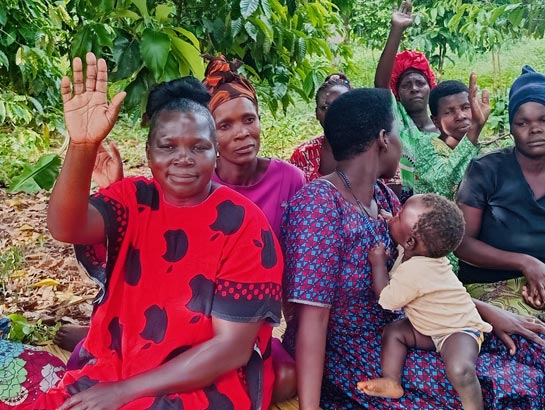
In Busulu, a community in eastern Uganda about 145 kilometers from Kampala, a group of women farmers is transforming their households through the adoption of biofortified crops. Over the past 1.5 years, members of the Busulu farmers group—most of them women of reproductive age with young children—have been growing iron beans and vitamin A maize (VAM), improving both their nutrition and livelihoods.
Before joining the initiative, these women faced persistent challenges. Household diets were limited (poor, not diversified), incomes were low and unpredictable, and opportunities to invest in their families’ futures were scarce. Paying school fees, accessing healthcare, and building resilience against shocks such as illness or poor harvests remained difficult for many.
In 2024, the women began growing biofortified crops with support through the Expanding Nutrients in Food Systems project implemented by HarvestPlus with the support from the Government of Canada. Under the project, each farmer accessed two kilograms of iron bean or vitamin A maize (VAM) seed at a subsidized price. With guidance from HarvestPlus field officers, they received training in improved agronomic practices, nutrition, and post-harvest handling, while also being linked to markets including local schools and processors. Wakabi Samuel, a local aggregator further supported the group by providing storage thus facilitating collective marketing, enabling farmers to sell in bulk and negotiate better prices.
What began as small-scale production for home consumption quickly grew into a reliable source of food and income. Farmers saved part of their harvest for replanting, gradually expanding their plots over three cropping seasons. By the most recent season, many were selling between 100 and 300 kilograms of vitamin A maize to market to generate income for their families.
The impact on household nutrition has been significant. Iron beans have become a preferred choice due to their soft texture, appealing taste, and shorter cooking time—often ready in as little as 30–45 minutes after soaking, compared to conventional varieties that can take up to 60 minutes or more. This reduced cooking time is especially important in low-resource settings, as it lowers fuel use and cooking costs, saves time for households, and encourages more frequent consumption of nutrient-rich foods. For many families, these crops are now a staple. Sophia, one of the farmers, explained that her family enjoys the beans, so she prioritizes these beans to her family. However, she sells part of her maize harvest to market. “My family loves the iron beans—they are soft, delicious, and cook quickly. We eat most of them at home. I sold some of my vitamin A maize and earned enough to pay school fees for my children,” she said. Her experience reflects a broader trend among the women, who often prioritize household nutrition before income generation.
For others, the crops have had a direct impact on health. Lillian, who was unwell for much of the previous year, consumed her entire harvest of iron beans. “I was sick last year and prioritize eating my iron beans and feeding to my family. My health improved, and now I can walk again,” she shared. Although her illness limited her production, she still contributed 50 kilograms of maize to her child’s school for meals, a common practice under the Home-Grown School Feeding system in the area. She is hopeful about returning to full production in the next season.
Income from surplus sales has enabled many of the women to invest in their families and diversify their livelihoods. Betty, purchased a goat and rented additional land for planting. Loy paid her children’s school fees, bought a goat, and started a small business selling tomatoes and silver fish within her community. Jessica paid school fees, contributed to school feeding, and began selling snacks, while Elizabeth invested in piglets as a future source of income.
These investments mark an important shift. Beyond meeting immediate needs, the women are building assets and creating new income streams, from livestock rearing to micro and small retail businesses. Their participation in collective marketing has strengthened their bargaining power and improved their access to better-paying markets, including schools and processors.
At the same time, the integration of biofortified crops into local school feeding systems is extending the benefits beyond individual households. By contributing vitamin A maize and iron beans to schools, the farmers are helping improve the quality of meals for children in their community, reinforcing the link between agriculture and nutrition. Schools are also buying from farmers, last season the schools bought about 4MT while a processor bought 3.5MT fetching approximately USD 2,571 for the group.
The experience of the Busulu farmers illustrates the powerful, interconnected impact of biofortified crops. With access to improved seed, knowledge, and markets, these women are not only improving their families’ diets but also strengthening their economic resilience. As they continue to expand production, grow their businesses, and invest in their futures, they are laying the foundation for more sustainable and self-reliant livelihoods.
Looking ahead, the farmers plan to increase the land under biofortified crops, expand their income-generating activities, and deepen their engagement in collective marketing. Their journey underscores the importance of integrated approaches that combine agriculture, nutrition, and market access—demonstrating how smallholder farmers, especially women, can drive meaningful change in their communities.