Sarah Nalule Championing Gender Equality Through Nutrition and Gender Empowerment
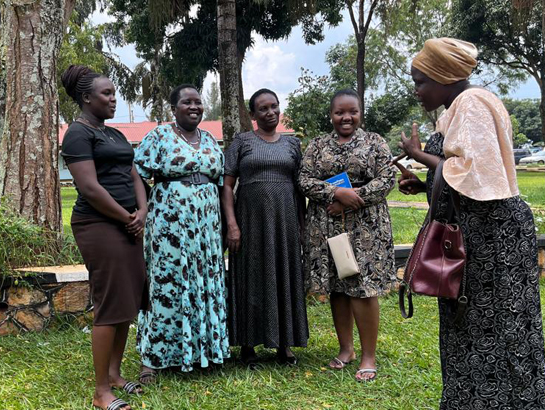
Sarah Nalule, a resident of Luwero District, Uganda, is a mother of seven and an active member of the Kassala Seed Bank, a facility that multiplies and stores seed in Luweero district. The seed bank was selected as one of the community seed multiplication centers for the Expanding Nutrients in Food Systems (ENFS) project supported by the Government of Canada. The seed bank received foundation seeds and was tasked with multiplying them for community distribution, ensuring farmers have easy access to quality biofortified seeds and promoting sustainability. By doing so, seed banks like Kassala play a vital role in enhancing food security, conserving crop varieties, and boosting agricultural resilience and nutrition security within the community.
Through her involvement in the seed bank, Sarah engaged with HarvestPlus, which introduced her to nutrient-enriched crops such as iron beans, vitamin A maize (VAM), and orange-fleshed sweet potatoes (OFSP). Impressed by their performance, particularly the iron beans, Sarah volunteered to become a community representative. In this role, she helped fellow farmers access biofortified seeds, multiply them, and benefit from these nutritious varieties. After receiving training on seed production through the ENFS project, Sarah went on to train other farmers, further expanding the reach of these life-enhancing crops.
Sarah’s leadership extended beyond agriculture. She was invited to a gender training session facilitated by HarvestPlus, where she was trained on gender transformative approaches to support women empowerment and this became a turning point in her journey. Before the training, Sarah, like many others in her community, held misconceptions about gender roles and equity. The session introduced the “vision journey” approach, which emphasizes shared decision-making and joint planning between husbands and wives—an uncommon practice in her community, where spouses often work independently and may even acquire assets separately.
“The techniques used during the training were an eye-opener,” Sarah recalls. “I could already feel the excitement of change taking shape.” Inspired and equipped, she began sensitizing members of her women’s group, using a few minutes during their quarterly meetings to discuss gender dynamics and family development.
Recognizing the need for wider outreach, Sarah engaged her local council chairman, who also owns a community radio station, to help her access airtime on the radio station. He offered her free airtime to sensitize the listeners on gender issues. As her radio sessions gained popularity, Sarah realized that many men felt excluded from the gender discourse. Many interventions targeted women and left out the men. She responded by launching a campaign aimed at restoring the role and dignity of men in families as responsible husbands and fathers.
The campaign focused on recognizing and celebrating men who actively contribute to their households. Leveraging events like International Women’s Day and primary school speech days, where Sarah served as Master of Ceremonies, she effectively used engaging tools such as games and role plays to convey her message. Her inclusive approach encouraged both men and women to reflect on their roles in achieving family harmony and shared prosperity, fostering a more balanced and supportive household dynamic.
With support from HarvestPlus, Sarah attended the district’s Women’s Day celebration, which was leveraged to deepen gender sensitization efforts. The well-attended event drew significant participation from both men and women. Sarah seized the opportunity to further promote her campaign on inclusive decision-making, engaging both men and women. Since then, she noticed a positive shift: fewer complaints about men during meetings and more men openly engaging in discussions about joint family decision-making and shared responsibilities with their wives.
Today, Sarah is preparing to replicate her campaign in a neighboring village where interest in gender awareness has grown. She remains passionate about integrated empowerment, stating, “Women’s empowerment is essential, but it cannot succeed if men are left behind. Men must be integrated as an essential pillar of women’s empowerment.”
Sarah Nalule’s story is a reminder that gender transformation at the community level begins with awareness, inclusion, and shared goals—a vision HarvestPlus continues to support across its global programs.