Pakistani Farmers Cope with Climate Challenges through Zinc Wheat
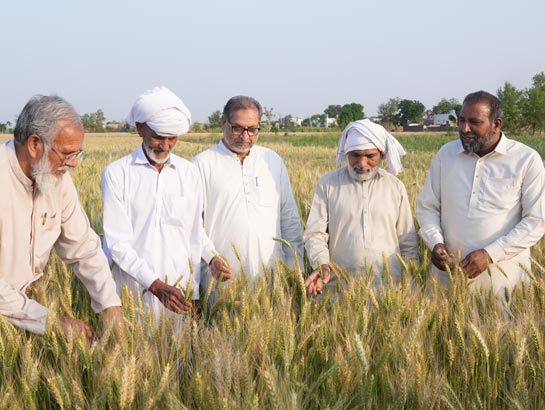
Wheat belts continue to face a growing mix of climate challenges in Pakistan, including crop diseases, unpredictable rainfall, extreme heat, and prolonged dry spells. However, farmers are increasingly finding relief in indigenous, climate-resilient, biofortified wheat varieties that can withstand harsh weather, deliver better yields, and restore much-needed nutrition to daily diets.
Farmers say shifting weather patterns have made wheat cultivation increasingly uncertain. Heavy rains often arrive when crops are most vulnerable, while extended droughts weaken plants before grain formation. Heatwaves now strike earlier and last longer, creating conditions for new pests and fungal diseases to spread across fields that were once stable.
With farmland shrinking due to urban expansion and older seed varieties performing poorly, scientists and growers have turned to locally developed, climate-resilient, zinc wheat as a practical solution for both food security and improved nutrition.
Dr. Javed Ahmed, Chief Scientist at the Ayub Agricultural Research Institute (AARI) in Faisalabad, said climate change has fundamentally altered wheat production across the country. Rainfall no longer follows predictable patterns, arriving in sudden heavy spells or not at all.
“Heat levels have repeatedly crossed the tolerance limits of traditional varieties, while new crop diseases have emerged as a direct result of erratic weather,” he said. “Our traditional wheat cannot cope with today’s climate. Both production and grain quality have suffered badly.”
To address these challenges, Pakistani scientists—working in collaboration with HarvestPlus, a global leader in biofortification research—have developed a series of improved wheat varieties suited to the country’s changing climate. These varieties perform better under stress, deliver higher yields, and provide better nutrition. Among them, Akbar 2019 has emerged as one of the most successful, offering strong resistance to heat, drought, and disease.
“We developed and scaled the Akbar 2019 variety in collaboration with HarvestPlus. It is biofortified with 38–40 ppm of zinc, helping address widespread nutritional deficiencies, especially among women and children,” Dr. Ahmed said. “Biofortified wheat gives farmers better harvests and families better nutrition without changing their eating habits.”
Zinc deficiency is widespread in Pakistan and often goes unnoticed. In children, it weakens immunity, slows growth, and increases susceptibility to diarrhea and infections. In women, it contributes to pregnancy complications, poor wound healing, and chronic fatigue.
Dr. Ahmed described biofortified wheat as one of the most cost-effective ways to reduce “hidden hunger.” “Farmers are increasingly choosing zinc wheat varieties such as Akbar 2019, Zincol 2016, and Nawab 2021 because these varieties perform well even in difficult seasons,” he added.
Prof. Imran Pasha, Dean of the Faculty of Food and Nutrition at the University of Agriculture Faisalabad, said zinc plays a vital role in immunity, cognitive development, and healthy ageing. “More than 50 million people in Pakistan are zinc deficient,” he said. “Large-scale cultivation and consumption of biofortified wheat is a simple, affordable, and sustainable solution to improve zinc intake.”
He urged families to use whole-wheat flour and encouraged farmers to adopt zinc-rich varieties to improve both yield stability and community health.
Farmers who have already made the switch report clear benefits. Abid Waseem, who has grown zinc wheat for several seasons, said the resilience of Akbar 2019 has persuaded many farmers in his district to abandon non-biofortified varieties.
“This variety can handle extreme heat, drought, and pests. My yields are higher and more reliable,” he said. Demand for flour made from zinc wheat is also growing. “People know it is more nutritious, especially for children.”
Waseem said farmers from nearby villages now regularly visit his fields to observe the crop’s performance and learn cultivation techniques. “The weather is unpredictable,” he said. “Farmers want something that survives—and now we have a solution.”
This story was originally published in Business Recorder and can be accessed here.