New Springer Volume Showcases Advances in Biofortified Millets for Global Nutrition
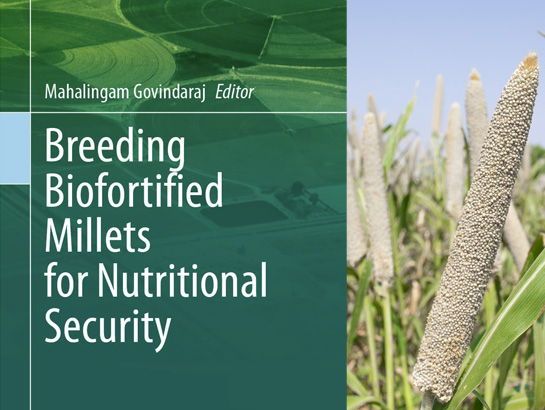
A newly published Springer Nature volume, Breeding Biofortified Millets for Nutritional Security, captures more than two decades of scientific innovation and global collaboration that are transforming one of the world’s oldest crops into a modern solution for hidden hunger and climate resilience. The book brings together leading researchers to document the latest advances in breeding nutrient-rich millets and charts the pathway from research laboratories to farmers’ fields and consumers’ plates.
Millets have long been valued as hardy crops that thrive in some of the world’s harshest growing environments. Naturally drought tolerant, heat resilient, and requiring fewer inputs than many staple cereals, they are increasingly recognized as climate-smart crops for the drylands of Asia and Africa. The new volume demonstrates how biofortification is unlocking even greater potential by breeding millet varieties with significantly higher concentrations of iron, zinc, and calcium—micronutrients essential for healthy growth, cognitive development, and immune function.
At the heart of these advances is HarvestPlus, working across CGIAR and with partners including the Alliance of Bioversity International and CIAT, ICRISAT, ICAR, national agricultural research systems, universities, and private-sector seed companies. Through sustained investments in crop development and breeding innovation, HarvestPlus has helped mainstream nutrition traits into pearl millet breeding programs, ensuring that improved nutritional quality is developed alongside farmer-preferred characteristics such as high yield, drought tolerance, and disease resistance.
The book is edited by Dr. Mahalingam Govindaraj, a HarvestPlus crop development specialist whose work has been instrumental in advancing biofortified millet breeding globally. Under his scientific leadership, more than 15 biofortified millet cultivars have been disseminated across India and Africa, while innovations such as high-throughput phenotyping, X-ray fluorescence (XRF) screening, genomic tools, and nutrition-focused breeding strategies have accelerated the development and release of nutrient-dense varieties.
Beyond breeding, the publication highlights a broader lesson: biofortification succeeds when science is connected to functioning seed systems, supportive policies, food processing, consumer demand, and commercial markets. The book explores advances in genetics and genomics, phenotyping technologies, product development, quality standards, and commercialization strategies that are helping move biofortified millets from experimental plots into national food systems. It also emphasizes the need for the Global Millet Alliance for Nutrition in bringing together researchers, governments, development organizations, and industry to accelerate the adoption of nutritious, climate-resilient millets.