Government of Zimbabwe Endorses Biofortified Crops as Key to Vision 2030
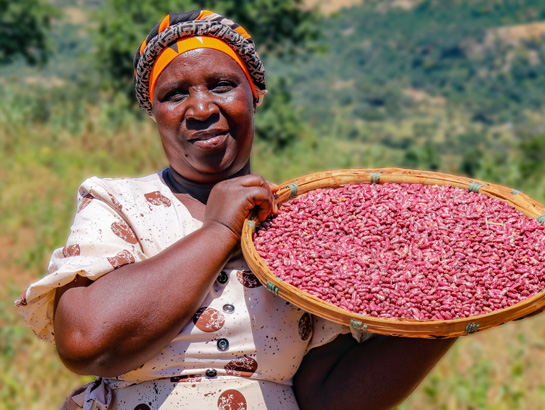
The government of Zimbabwe, through Prof. Obert Jiri, Permanent Secretary in the Ministry of Lands, Agriculture, Fisheries, Water and Rural Development, has officially recognized and endorsed biofortification efforts in the country. Prof. Jiri praised researchers and institutions promoting nutrient-rich crop innovations during the 2nd Research and Extension Symposium on May 30, 2025. He emphasized the crucial role of agricultural research in achieving national development goals under Vision 2030.
“The greater mission for all researchers is not merely to innovate,” he stated, “but to uplift communities, revive the economy, and restore Zimbabwe’s rightful place as Africa’s breadbasket.” He commended researchers under his Ministry for their impressive outputs, specifically highlighting iron beans, vitamin A maize, and orange fleshed sweet potatoes, which has gained widespread acceptance and cultivation across the country.
Held under the theme “Transformative Agricultural Technologies Accelerating the Attainment of Vision 2030”, the symposium brought together agricultural scientists, extension officers, farmers, private sector actors, and development partners to share knowledge and chart pathways to a more food- and nutrition-secure Zimbabwe.
Sakile Kudita, the Country Manager for HarvestPlus Zimbabwe, reaffirmed the HarvestPlus’ commitment to supporting government-led agricultural transformation.
“We reaffirm our commitment, as CIAT and HarvestPlus, to supporting the Ministry in its pursuit of scientific evidence to inform national priorities, policies and strategies. Our shared purpose is to contribute to sustainable food systems transformation by improving food and nutrition security, empower farmers to thrive, and safeguard the environment in the face of a climate crisis.” said Kudita.
This strong government endorsement coincides with the growing popularity of NUA45, an iron bean variety, among Zimbabwean farmers and consumers. With its high yield potential (up to 3 tons per hectare), early maturity (80–85 days), fast cooking time, and resistance to major bean diseases like rust, angular leaf spot, and bacterial blight, the variety has become a staple for many.
A 2023 nationally representative adoption survey revealed a 29 percent adoption rate (or varietal penetration) for NUA45, while a focused study in the bean production corridor recorded a 47 percent adoption rate. These figures highlight the variety’s widespread acceptance, which has likely continued to grow in recent months.
NUA45’s drought tolerance and adaptability to different agroecological zones has made it a preferred choice in both commercial and humanitarian agricultural interventions. As a result, several government and development partner programs involved in social protection and agricultural recovery have now largely shifted to distributing NUA45, making it the variety of choice for bean seed and grain distribution programs.
As Zimbabwe accelerates efforts toward achieving Vision 2030, biofortified crop varieties continue to demonstrate how innovation in agriculture can address hidden hunger, improve livelihoods, and transform food systems – even for smallholder farmers.