GALS Approach by HarvestPlus Empowering Women to Transform Communities in Zimbabwe
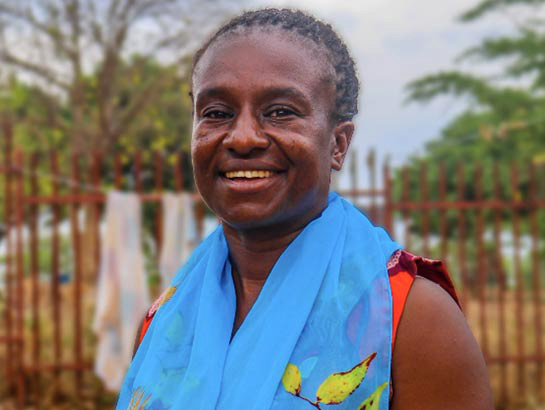
In Guruve Ward 11, Zimbabwe, Greatwin Chokumanja is a smallholder farmer known growing biofortified crops. An Agricultural Business Advisory Officer (ABAO) under the Department of Agricultural and Rural Development Advisory Services (ARDAS), Greatwin’s journey shows how gender-transformative approaches can strengthen families, livelihoods, and communities.
Greatwin’s transformation did not begin in her fields—it began at home.
“My family used to live without a clear direction. Everyone did their own things: the father, the mother, and even the children. We were not united,” Greatwin recalls.
Like many rural households, her family struggled with uneven workloads and decision-making. Greatwin shouldered most household responsibilities, while her husband made all the major decisions about farming and finances. Without shared planning or communication, tensions grew, productivity remained low, and the household operated more as individuals than as a team.
Change came when Greatwin participated in a Training of Trainers (ToT) under the Gender Action Learning System (GALS), introduced through the Expanding Nutrients in Food Systems project in Zimbabwe. Implemented by HarvestPlus with support from the Government of Canada, the training equipped her with practical tools to promote joint goal-setting, equitable workloads, and shared decision-making.
What made the training especially powerful was Greatwin’s dual role—as both a farmer and an extension officer. GALS did not remain a theory; she immediately began applying its principles within her own household and integrating them into her professional work as an ABAO.
The results were transformative. Greatwin and her family began planning together and created a shared household vision. With renewed unity, they launched a poultry project that increased their income while strengthening cooperation at home.
Her husband, once hesitant, now actively supports shared decision-making and participates in daily household chores. The shift in roles and attitudes brought not only economic gains, but also deeper trust and harmony within the family.
“At first, my husband did not fully understand the purpose of GALS and was a bit resistant. He thought his authority was being taken away, including traditional roles, and this made planning and other activities difficult. It took time for him to understand. However, I showed him some detailed household budgets and project ideas I had drafted, demonstrating how they could work if we collaborated as a family. He appreciated this approach and adopted it. What also worked was improving communication with him at every step of the projects and household activities. In the end, he is now fully supportive,” shared Greatwin.
Inspired by her own experience, Greatwin extended the impact beyond her household. She trained 535 smallholder farmers, representing 371 households in her ward, to adopt GALS principles, helping families work together more effectively and improve productivity. Across Mashonaland Central, the project has trained 184 partner staff, including 102 women, contributing to more empowered households and gender-equitable communities.
Looking Ahead: Scaling Change Through Example
Today, Greatwin is focused on expanding her poultry and biofortified crop enterprises while mentoring more families to embrace gender equality through GALS.
“We now have a shared vision and work together as one family,” she says. “I want others to experience the same transformation.”