Building the Science for More Nutritious Crops in South Asia
When plant breeders develop new crop varieties, they have traditionally focused on traits such as higher yields, disease resistance, and the ability to withstand changing climates. But as countries across South Asia work to address persistent malnutrition, nutrition can no longer be treated as an add-on at the end of the breeding process.
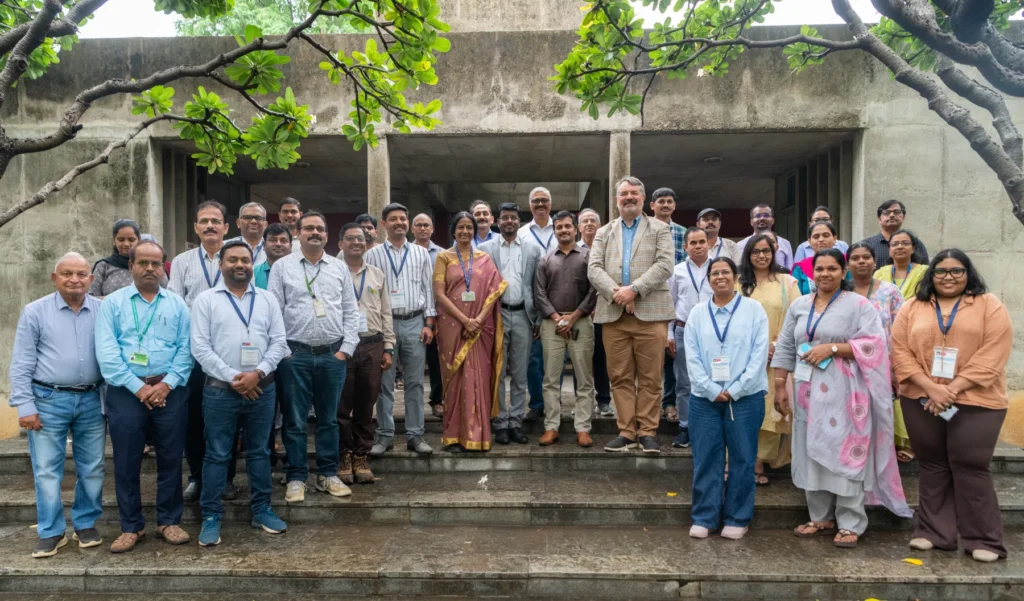
That was the central message of the Biofortification Research and Scaling Workshop on Elemental Analysis for South Asia, held from July 29 to 31, 2026, at the International Crops Research Institute for the Semi-Arid Tropics (ICRISAT) campus in Patancheru, India.
By the end of the workshop, participants had established a common vision: nutrition-sensitive breeding should become part of routine crop improvement rather than a separate activity. The three-day workshop brought together 39 participants from CGIAR centers, national agricultural research systems, universities, HarvestPlus, HarvestPlus Solutions, Better Diets and Nutrition, development partners and private seed companies. Together, they explored how stronger regional laboratory services and partnerships could help breeders develop more nutritious staple crops at scale.
The discussions centered around a simple but important question: How can breeders routinely measure and select nutrients such as iron and zinc while continuing to improve the yield, resilience and performance of crops?
The answer lies partly in strengthening access to modern analytical technologies. Participants discussed the potential of technologies such as X-ray fluorescence (XRF), near-infrared spectroscopy (NIRS), genotyping, and digital phenotyping to support faster and more efficient crop breeding. These tools can help researchers analyze large numbers of samples and generate the data needed to identify promising breeding lines.
However, technology alone is not enough. Reliable results depend on proper sample preparation, harmonized laboratory procedures, quality assurance systems, trained personnel and effective management of samples and data. Participants therefore emphasized the need for a shared regional service system that could make advanced analytical services more accessible to breeding programs across South Asia.
The workshop highlighted the potential of the CGIAR Shared Laboratory Services model, which would allow users to access laboratory services through a common digital platform. Through the system, researchers can request analyses, submit sample information, track the progress of their samples, and receive results electronically.
For breeding programs that face high equipment costs, limited technical expertise or fragmented laboratory capacity, shared services could offer a more efficient way to access advanced technologies.
The demand is already clear. Discussions during the workshop identified potential requirements for approximately 93,000 samples across 11 crops, including rice, wheat, pearl millet, finger millet, sorghum, chickpea, pigeon pea, and groundnut. Around 90 percent of participants indicated plans to adopt one or more shared services.
The need also extends beyond iron and zinc. Breeders are increasingly interested in traits such as protein, calcium, amino acids, carotenoids, oil and fatty acid profiles, and other nutritional and quality characteristics.
India’s experience offered an important example of what sustained investment in breeding, laboratory support, and partnerships can achieve. Participants learned about the country’s efforts to develop nutrient-rich crop varieties while maintaining productivity and farmer acceptance.
For HarvestPlus and its partners, the workshop was also an opportunity to reinforce the role of elemental analysis as more than a laboratory exercise. Reliable data can inform decisions throughout the breeding process—from selecting parent lines and screening early generations to advancing promising varieties and supporting quality assurance.
Achieving that vision will require continued collaboration among research institutions, governments, universities, development partners, and the private sector. It will also require harmonized standards, shared infrastructure, skilled people, and sustained investment.
The workshop marked an important step toward building that ecosystem in South Asia—one that could help ensure that the crops of the future are not only productive and resilient, but also contribute to healthier diets.